
by Ruth
(Continue from last week)
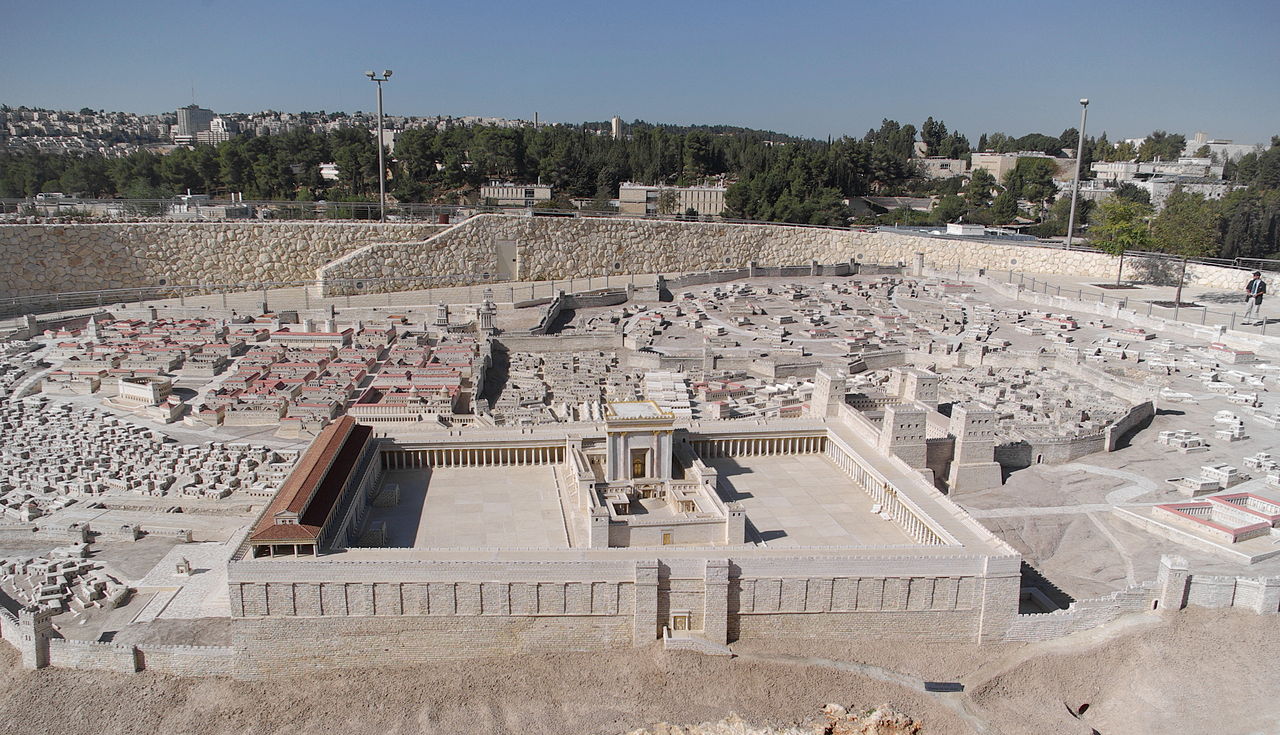
The palace complex included various buildings, such as the Hall of Pillars, Throne Hall, House of the Forest of Lebanon, and living quarters for the royal household. A special royal ascent connected the palace courtyard to the Temple.
My husband and I spent eight weeks serving as volunteers at the Garden Tomb in 2018. We visited the City of David, the Wailing Wall, and the golden Dome of the Rock a few times. However, Solomon’s palace was not on the typical tourist itinerary. During our time exploring Jerusalem, we never encountered any clear markers or structures attributed to Solomon’s palace. This made me wonder—what happened to this grand complex? Why does no physical evidence of Solomon’s palace remain today?
Upon further reading, I learned that Solomon’s palace, like most of the original First Temple structures, was likely destroyed during the Babylonian conquest of Jerusalem in 586 BCE. Over the centuries, the site was built over repeatedly by successive empires—Greek, Roman, Byzantine, Muslim—each leaving their own architectural imprint and often reusing stones from earlier buildings. Thus, few visible remnants of Solomon’s palace survive above ground.
Archaeologists believe the area south of the Temple Mount and north of the City of David, currently buried under layers of later construction, is where the palace once stood. Limited excavation is possible there due to religious and political sensitivities, making a detailed exploration of the palace site challenging. Scholars have pieced together its features mostly from biblical descriptions (such as 1 Kings 7:1-12) and comparative studies of ancient Near Eastern palaces.
Although the First Temple that Solomon spent seven years building on Mount Moriah was eventually destroyed, its sacred site was treasured and later became home to new monuments, most notably the golden Dome of the Rock built by Muslims centuries later. In contrast, Solomon’s own grand palace—which took him thirteen years to construct—was ultimately buried and lost under layers of later construction, leaving little trace behind. How ironic that the king’s greatest personal achievement vanished into the earth, while the site he built for God became the center of enduring reverence and monumental renewal, treasured across religions and ages.