
Ruth
The Mississippi has a way of making time feel generous.
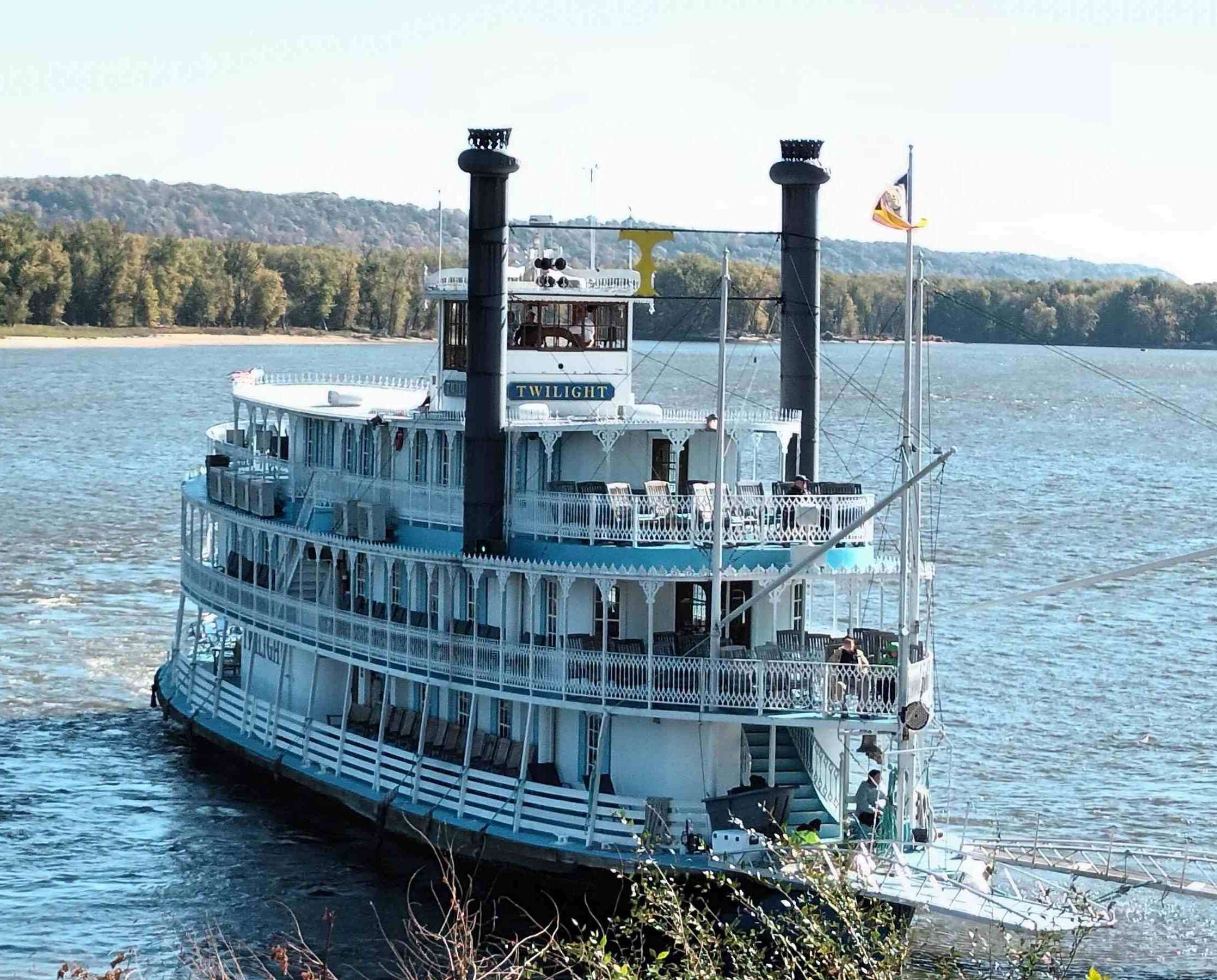
Last year, on a crisp fall morning in Dubuque, my husband and I stepped aboard the Twilight—the classic river cruise ship that looked as though it sailed right out of a Mark Twain daydream. A whole day of fun stretched out in front of us. The hills around the river valley glowed with the season’s change, a sweep of copper and gold, and the water moved past as steadily as a heartbeat. We cast off toward Guttenberg, the deck lively with the soft hum of conversation and the promise of all that open water.
Breakfast was unhurried and satisfying, the meal that took the edge off the morning chill and set a friendly tone for the day. There was something about eating on the river—every sip of coffee a little warmer, every bite more comforting, as the banks scrolled past like an old family album. The captain (also the host) took up a microphone to point out landmarks, wildlife, and the barely perceptible changes in current. A railroad ran tight along the Iowa shore, its iron line an ever-present companion. Freight trains appeared and disappeared between cottonwoods, their horns cutting across the water, reminding me this river wasn’t just scenery but a working corridor.
It didn’t take long for us to spot the bald eagles.
“Off your port side. Look at that nest,” the host said, and everyone drifted to the railings.
Amid the high forks of a cottonwood, the nest—sticks piled upon sticks, a structure with ambition—looked enormous. It felt architectural, an eagle’s version of a mansion. Minutes later, two eagles rode a column of air above the bluff line, their wings holding steady above the hills. We watched them in near-silence, broken only by a whispered chorus of “wow.” It was one of many sightings the host narrated with a sense of neighborly pride, as if introducing us to the river’s old families.
Between towns, we passed farms and wooded draws where sumac flared red and maples threw light across the slopes. Along the steep Iowa hills, beautiful houses perched like well-chosen ornaments. Some were stately old homes with wraparound porches. Others were newer mansions with enormous windows to catch the sun. Our boat, Twilight, eased around bends, and the houses came and went, each one suggesting a different way of living at the water’s edge.
On the forward deck, an old guy with a weathered ball cap unpacked a violin case and started tuning. His bow found a waltz that folded into the river noise, then wandered into a fiddle tune that drew out claps. A few people pulled out phones and filmed a bit, but most of us listened. There was a rare sweetness in hearing unamplified music outdoors, especially with the gorgeous view.
The crew also provided games. Somewhere near a curve where the river widened, we played trivia—questions about the river’s depth, the towns we were passing, the birds we were spotting. Our table cobbled together answers from half-remembered facts and good guesses. Whether anyone kept score hardly mattered. The prize was laughter and permission to lean into this floating community. If you’d told me beforehand that my favorite moment might involve getting a question wrong about lumber barons, I wouldn’t have believed you. But that was the charm of this trip.
We slowed near Finley’s Landing, where the day wore a bright mid-morning sheen and the water ran glossy. On the shoreline, some instruments moved like patient beetles, scooping and shifting sand from the channel near the dock. The host explained how the delicate choreography kept a river like this navigable—how the channel shifted and the sand needed to be cleared to keep boats moving safely. Watching the dredge work felt like seeing the river’s backstage, the practical effort that let the beauty stay effortless.
(Please come back next week for Part 2)